

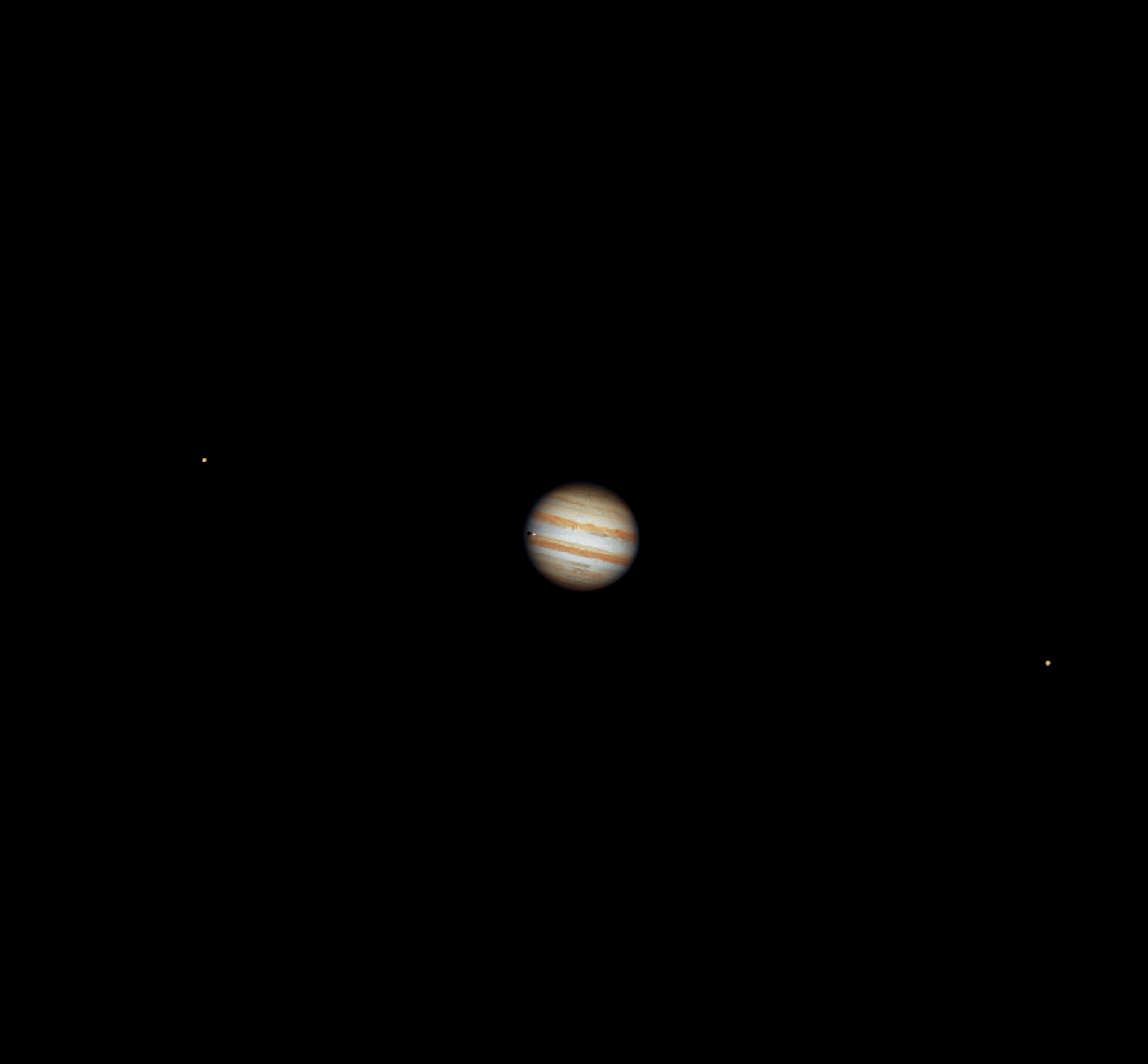
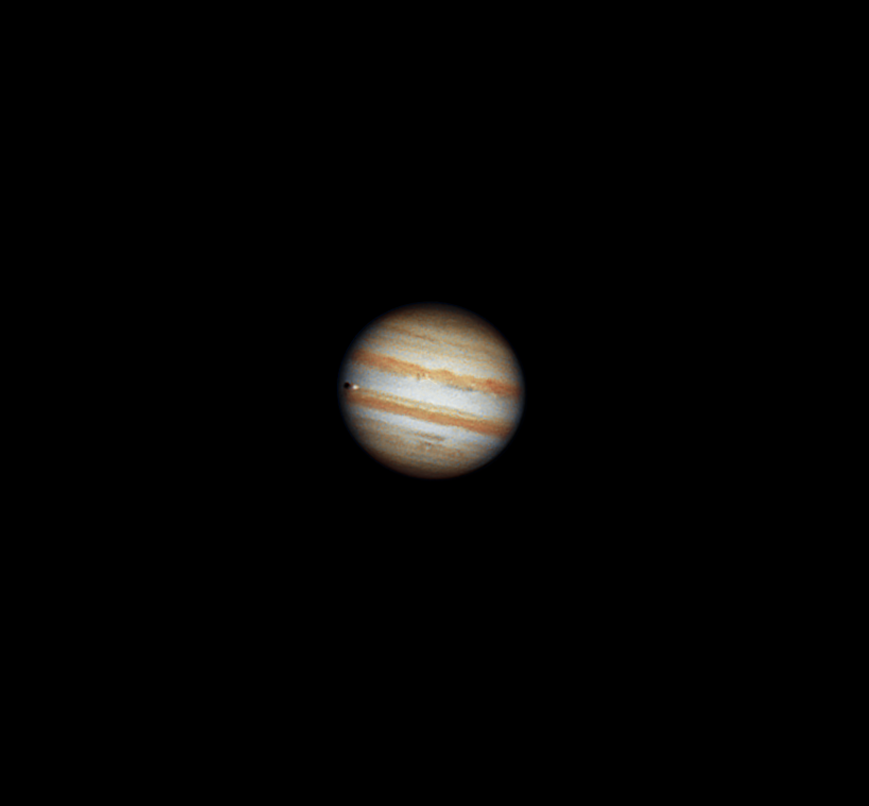
Após várias noites a tentar resolver problemas técnicos que me impediam de capturar Júpiter a cores, finalmente consegui fazê-lo. Esta é a minha primeira fotografia de Júpiter a cores, capturada numa única sessão. Consegui também apanhar três das luas galileanas, Io, Europa e Ganymede, mesma imagem, com destaque para a sombra de Io projetada sobre o magnífico planeta.
Io, Europa e Ganymede fazem parte das quatro maiores luas de Júpiter, descobertas por Galileo Galilei em 1610, sendo algumas das mais estudadas do Sistema Solar. Io é o mundo mais volcanicamente ativo do Sistema Solar, com centenas de vulcões e atividade interna gerada pelas forças de maré de Júpiter e das outras luas.
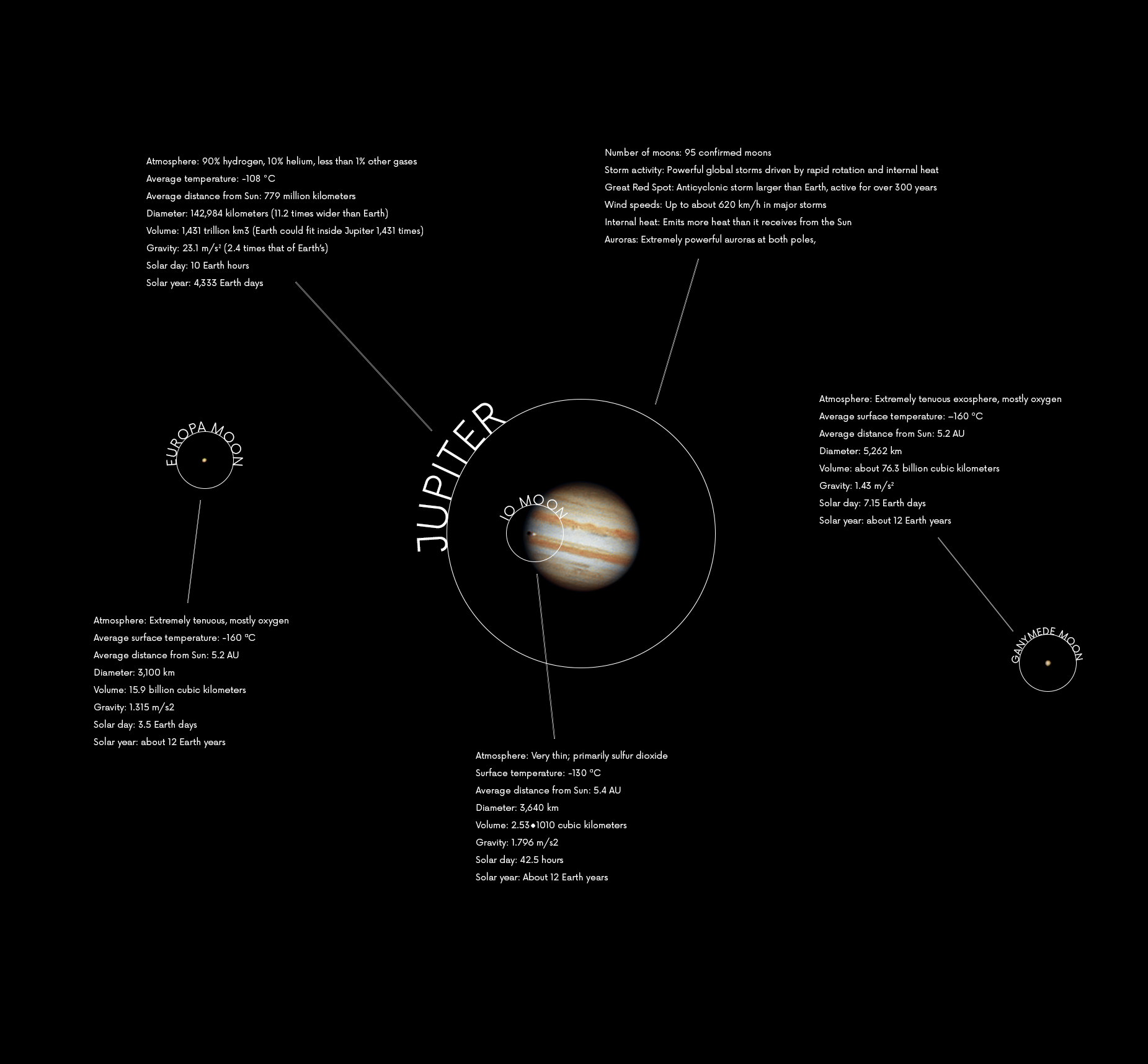
After several nights trying to resolve technical issues that were preventing me from capturing Jupiter in color, I finally managed to do it. This is my first color photograph of Jupiter, captured in a single session. I also managed to capture three of the Galilean moons, Io, Europa, and Ganymede, in the same image, with a clear view of Io’s shadow projected onto the magnificent planet.
Io, Europa, and Ganymede are among the four largest moons of Jupiter, discovered by Galileo Galilei in 1610, and are some of the most studied objects in the Solar System. Io is the most volcanically active world in the Solar System, with hundreds of volcanoes and internal activity generated by the tidal forces of Jupiter and the other moons.
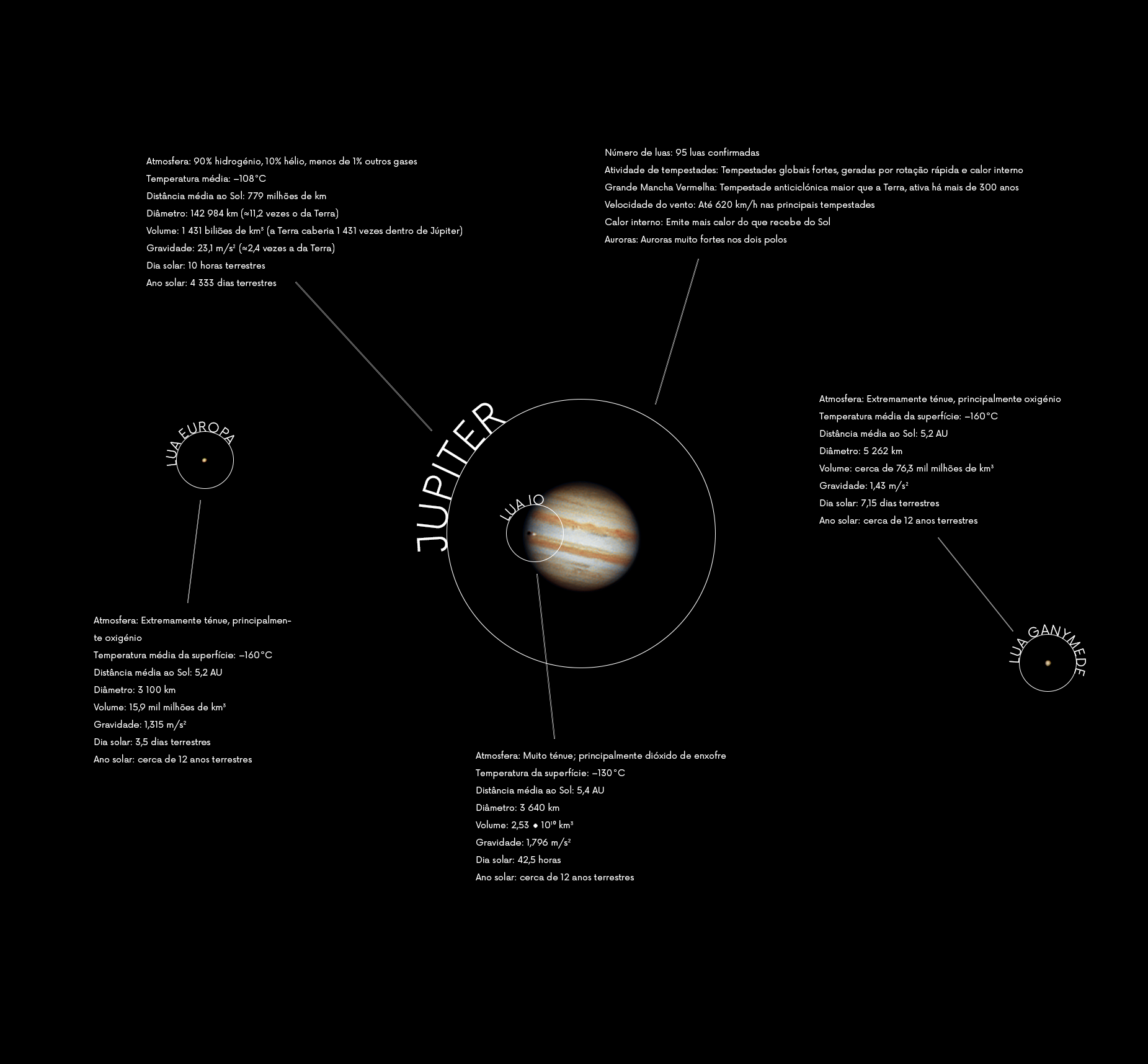

Europa tem uma superfície de gelo marcada por longas fraturas e acredita-se que por baixo exista um oceano de água salgada, que pode ser um dos melhores lugares para procurar condições habitáveis além da Terra.
Ganymede é a maior lua do Sistema Solar, maior do que Mercúrio, possuindo um campo magnético próprio e indícios de um vasto oceano subterrâneo de água sob a sua crosta de gelo.
A captura foi realizada com uma câmara ZWO ASI678MC acoplada a um telescópio Celestron Evolution C6 montado numa Sky-Watcher AZ-GTiX, sem filtros nem acessórios adicionais. Para obter a imagem final, fiz o stack de um vídeo de cerca de 10 minutos, processando depois no PixInsight e Photoshop, com ajustes de cor e contraste para revelar as bandas de nuvens de Júpiter e a posição das luas.
Europa has an icy surface marked by long fractures, and it is believed that beneath it lies a saltwater ocean, which could be one of the best places to look for habitable conditions beyond Earth.
Ganymede is the largest moon in the Solar System, larger than Mercury, with its own magnetic field and evidence of a vast subsurface ocean of water beneath its icy crust.
The capture was made with a ZWO ASI678MC camera attached to a Celestron Evolution C6 telescope mounted on a Sky-Watcher AZ-GTiX, without any filters or additional accessories. To create the final image, I stacked a video of about 10 minutes, then processed it in PixInsight and Photoshop, adjusting color and contrast to reveal Jupiter’s cloud bands and the positions of the moons.
🔭 Gear Used
🔭 Telescope: Celestron Evolution C6
🗜 Mount: Sky-Watcher AZ-GTiX
📷 Camera: ZWO ASI678MC
🔌 Accessories: None
🎯 Filter: None
⏳ Acquisition
⏱ Video duration: ~10 minutes
🧮 Number of frames stacked: Entire video
🕒 Total integration: One capture session
🌒 Sky location: Silves, Portugal, 14th Jan 2026